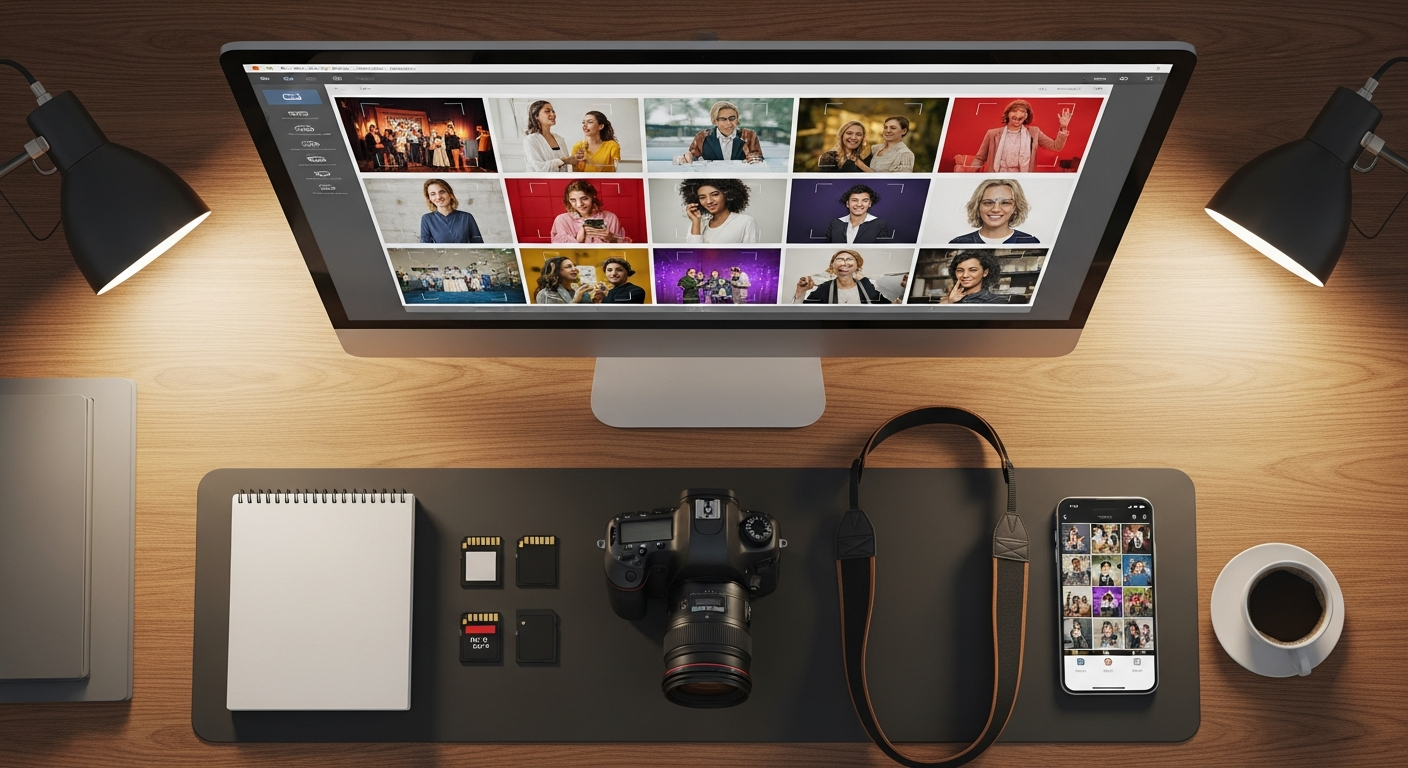
I have been talking to event photographers for the better part of two years now, both at conferences and on the platform itself, and a pattern has emerged. The same five reasons keep coming up when someone explains why they finally moved their event work to InItPic. None of them are flashy. None of them are about AI in the abstract. All of them are about money, time, or both.
Here is the honest list, in roughly the order I hear it.
1. Selfie search converts roughly three times better than bib or name search
This is always the first one. A bib-search marathon gallery on a traditional platform converts roughly one in twenty viewers into a buyer at an average order around $8. The same gallery on a selfie-search platform converts roughly one in seven viewers at an average order around $14, with another 8-12% adding a print on top of the digital purchase.
That math is the part that makes the switch unavoidable. For a 5,000-frame marathon with 1,500 unique viewers, the difference is roughly $600 on the old model versus $2,600 on the new one. That is real money, on the exact same set of photos, with no extra shooting effort. The detailed comparison is on our AI search vs manual page.
2. Same-day upload is actually realistic
Anyone who has tried to upload a 12,000-frame gallery to SmugMug knows the pain. Browser tabs crash. Files time out. By the time the gallery is live, three days have passed and the buyer momentum is gone.
InItPic uses direct-to-S3 chunked uploads with three parallel workers, which means a 12,000-frame gallery uploads in the time it takes you to make dinner. The face indexing runs in parallel during the upload itself, so the gallery is searchable the moment the last file lands. Same-day delivery is the rule, not the exception, and same-day delivery roughly doubles your sales versus posting forty-eight hours later.
3. Prints actually sell because the buyer sees them on their own photo
Print products on most photo platforms live on a separate page. The buyer has to click through, pick a size, upload their photo to a third party, configure shipping. By the time that flow is done, half of them have given up.
On InItPic, the print options appear on the same screen where the buyer is looking at their photo, with a photorealistic mockup generated through Printify showing their actual photo on canvas, on a t-shirt, on a phone case. They see the result before they decide what to spend, and the print attach rate jumps from roughly 2% to 8-12% per buyer. That is one of the single biggest revenue levers in the platform, and it works without any extra effort from you. The operational case for prints versus digitals is in the photographer playbook.
4. 85% payout and transparent margins
Most photographers I talk to are not even sure what their effective payout is on other platforms because the fees are buried in fine print. Subscription fees, transaction fees, currency conversion fees, payout fees. By the end, the photographer is keeping somewhere between 55% and 70% of the listed price.
InItPic is 85% photographer payout on digital sales, full stop. Print margins are visible per product (basePrice, marginPercent, your share). The dashboard shows you exactly what you earned per event, this month, all time. The earnings chart on the dashboard is real numbers from the database, not estimates.
5. The photographers do less work, not more
This is the surprise reason. People expect that adding face matching means more setup, more configuration, more buttons to press. The opposite is true. You upload the gallery. You do not have to tag photos. You do not have to label faces. You do not have to organize by attendee. The system indexes everything during upload and the buyer's selfie does the searching for you.
The amount of "buyer support" work also drops to almost zero. On a bib-search gallery, you spend hours answering "why is this photo of someone else in my results" emails. On a selfie-search gallery, the buyer is matched to their own face. The wrong-photo emails almost disappear. Your weekend is yours again.
The honest case against switching
To be fair, there are two reasons people stay on their current platform. The first is sunk cost: they already have client galleries from the past three years on PicTime and they do not want to migrate. Fair. You do not have to migrate. You can run both platforms in parallel and move new events over. The second is brand pages: some platforms let you sell under your own domain, which feels important until you realize that buyers find you through search, not through your domain. The conversion lift on a high-traffic selfie-search platform usually wipes out the domain consideration.
If you are sizing up the switch and want a more conceptual breakdown of how the matching actually works under the hood (worth knowing so you can answer client questions), read our how the AI works post. If you want the operational playbook (pricing, turnaround, what to shoot), read the photographer playbook. And if you are ready to try it on a single event before committing to a plan, the free tier covers 512MB of storage, which is plenty for a small first event to verify the math for yourself.
Try the math on your next event
Free tier covers your first small event. 85% payout. Same-day uploads.
Get started as a photographer